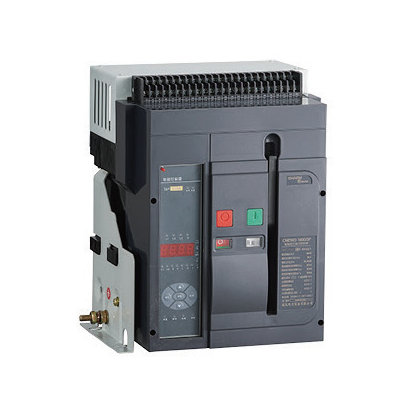
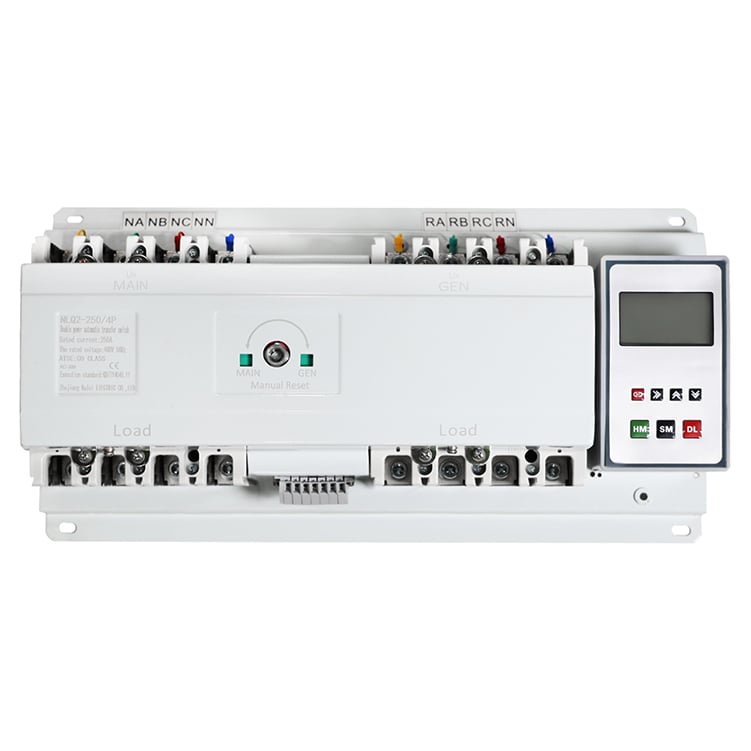
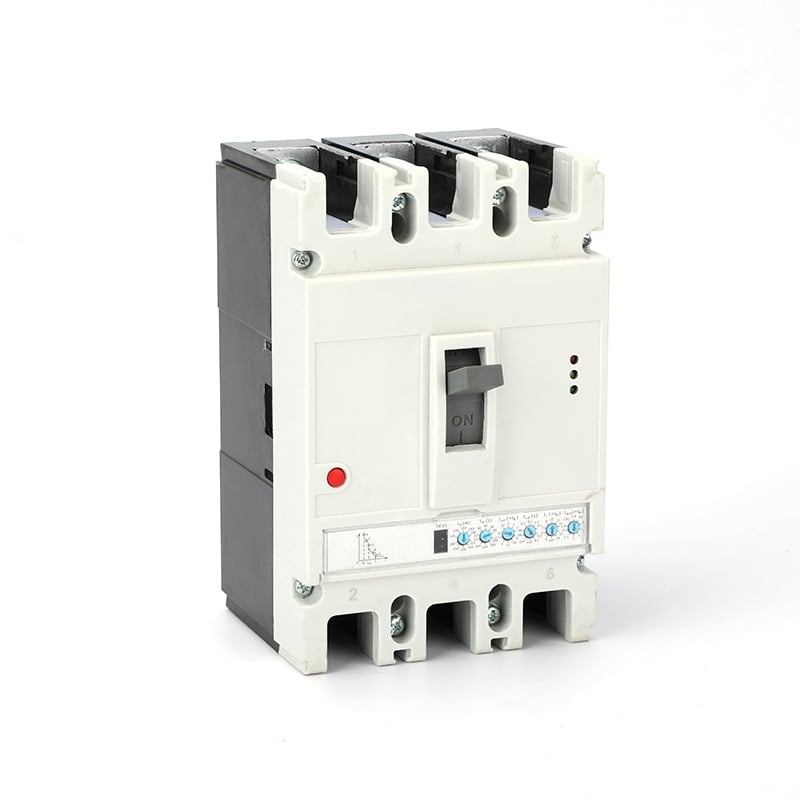
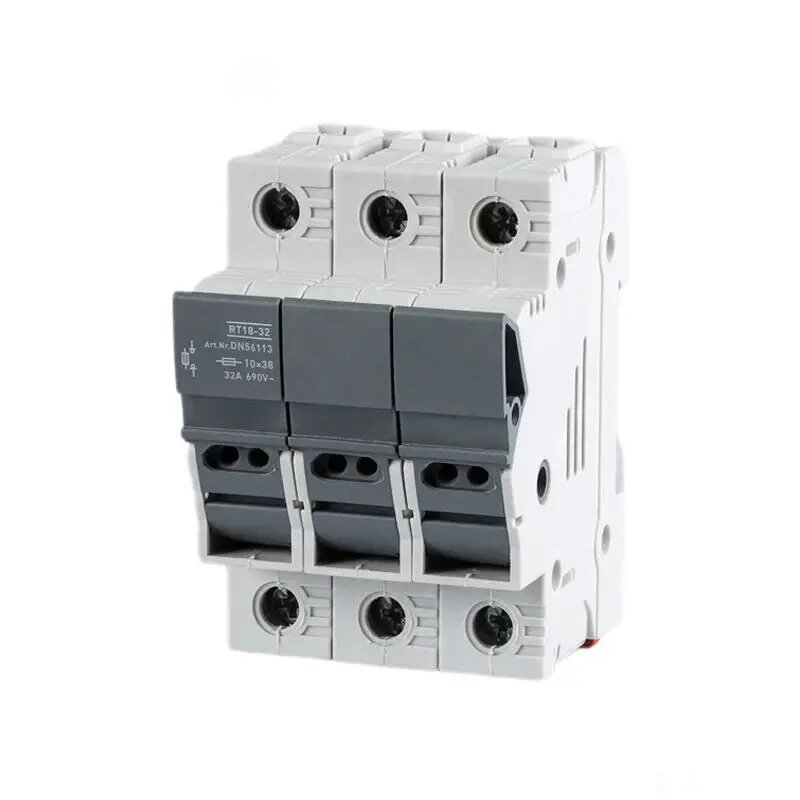
Custom LV distribution system deployed for Tier-III data center with redundancy and remote monitoring.
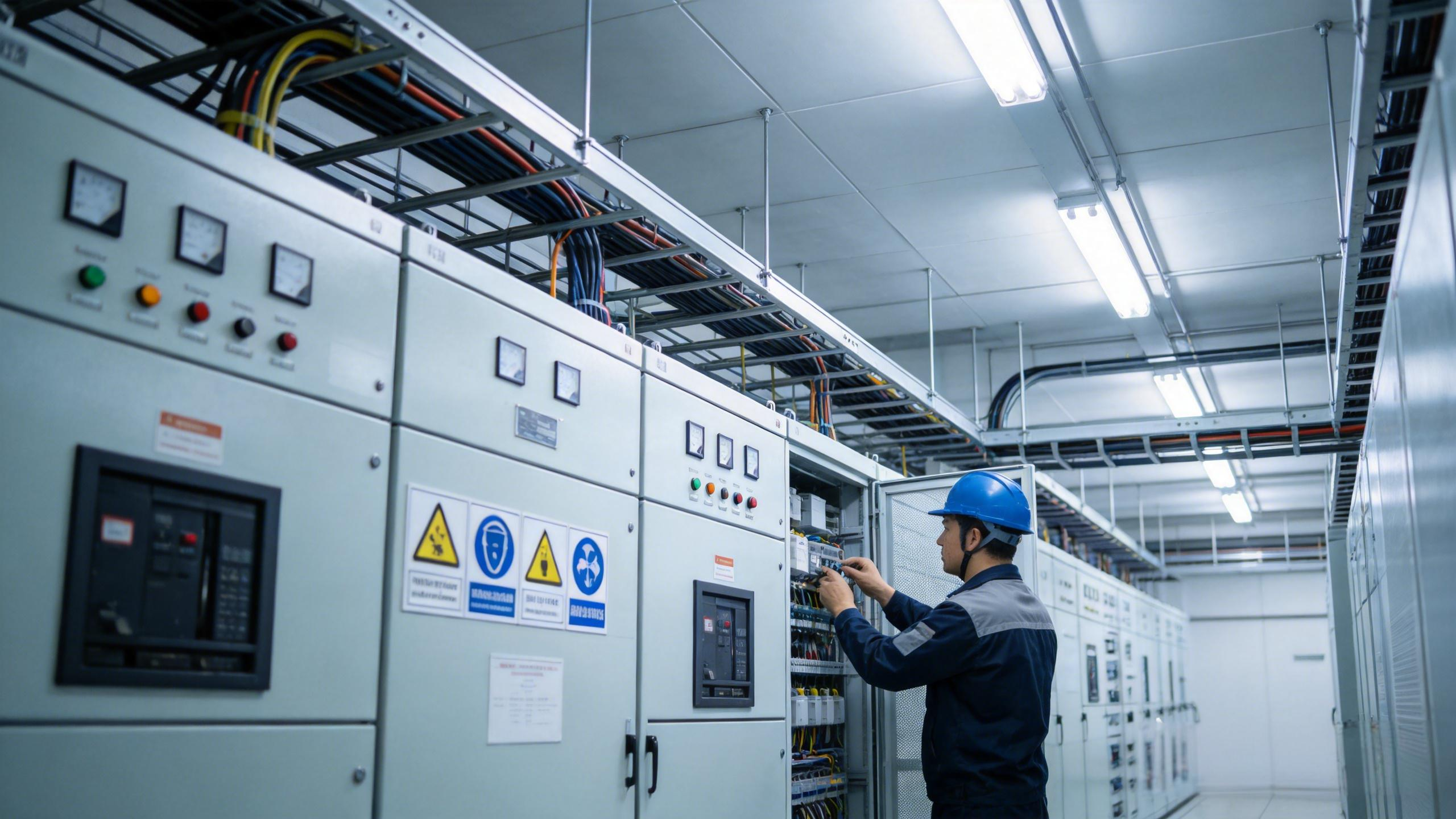
This project involved the design, supply, and commissioning of a fully integrated low voltage (LV) distribution panel system for a Tier-III certified data center located in Frankfurt, Germany. The facility serves as a critical European hub for a global cloud services provider, requiring uninterrupted power availability, strict thermal management, and real-time operational visibility. With a total installed load of 4.8 MVA across dual redundant 20 kV/400 V substations, the LV infrastructure needed to support over 120 server racks per hall, high-density UPS-fed circuits, and mission-critical cooling systems. Our engineering team collaborated closely with the general contractor and facility operator from early design review through FAT and on-site commissioning.
The client faced three interrelated challenges: first, ensuring N+1 redundancy at every level — from main incomers to busbar trunking and final distribution boards — without compromising space efficiency in the compact electrical rooms. Second, achieving seamless integration with the existing BMS (Building Management System) and new DCIM (Data Center Infrastructure Management) platform for remote monitoring of current, voltage, power factor, harmonic distortion, and circuit breaker status. Third, complying with stringent German standards including VDE 0100-751 (data center wiring), VDE 0105-100 (operational safety), and EN 61439-2 (assembly certification), while accommodating rapid scalability for future phase expansions. Traditional panel solutions lacked the modularity, digital interface depth, and certified short-circuit ratings required.
We supplied a customized smart LV distribution system comprising: (1) Two primary 4000 A main switchboards with integrated arc-flash mitigation, dual-metering modules, and Ethernet/IP gateways; (2) Eight secondary distribution panels (2500 A each), each equipped with intelligent outgoing feeders featuring Class II energy meters, residual current monitoring, and configurable trip logic; and (3) A unified SCADA-ready architecture using IEC 61850-compliant communication protocols. All panels were built to EN 61439-2 with IP54 enclosures, copper busbars rated for 85 kA/1s short-circuit withstand, and UL-listed components where applicable. Remote monitoring was enabled via embedded web servers and MQTT API endpoints, allowing secure access to real-time analytics and predictive alerts through the client’s DCIM dashboard. The solution fully addressed the low voltage panel project requirements while delivering a scalable, future-proof data center electrical solution.
Implementation followed a phased approach over 14 weeks. Phase 1 included factory acceptance testing (FAT) with live I/O simulation and cybersecurity validation of communication interfaces. Phase 2 covered logistics coordination for just-in-time delivery to the Frankfurt site, minimizing on-site storage needs. Phase 3 involved parallel installation during non-peak hours to avoid service interruption — all LV panels were pre-wired and pre-tested off-site, reducing field labor time by 37%. Final commissioning included thermal imaging of all connections, sequence-of-operation verification, and integration stress testing with the BMS under simulated fault conditions. Our engineers remained on-site for 3 weeks post-commissioning to support handover training and documentation sign-off.
The completed system achieved 100% compliance with Tier-III uptime requirements and reduced average power monitoring latency from 15 seconds to <150 ms. Energy transparency improved significantly: sub-metering granularity enabled identification of 12% inefficiency in legacy HVAC circuits, leading to immediate optimization. Operational KPIs show a 42% reduction in manual inspection frequency and zero unplanned outages over 18 months of operation. From an infrastructure perspective, the modular design allowed seamless addition of two new distribution zones within 6 weeks during Phase II expansion — validating the long-term flexibility of the Germany infrastructure case. Total cost of ownership (TCO) is projected to decrease by 19% over 10 years due to predictive maintenance capabilities and reduced downtime exposure.
‘The reliability and digital depth of this low voltage panel project exceeded our expectations,’ stated the Facility Director. ‘Not only did it meet all German regulatory and Tier-III technical benchmarks, but its native integration into our DCIM ecosystem transformed how we manage power health across the estate. This is now our reference standard for future European deployments.’

ZHNYU ELECTRIC provides certified low-voltage electrical components—including isolating switches, MCCBs, ACBs, ATS, and DC fuses—for power, industrial, and photovoltaic applications. ISO9001, CE, CCC, RoHS compliant. Serving 60+ countries. Partner with us today.ZHNYU ELECTRIC, founded in 1992, is a professional manufacturer integrating R&D, production and sales of low-voltage electrical components and accessories.
 EN