
 EN

Why is an isolator switch required in every electrical panel installation?
Time : 2026-09-14
The Underappreciated Role of Isolator Switches in Modern Power Infrastructure
Walk through any industrial production site or commercial power distribution room, and visitors will find rows of operating control cabinets supporting stable power delivery. While most people focus on intelligent control systems and circuit protection devices, the isolator switch remains a quiet yet indispensable core component of every low-voltage power system. Unlike electronic switches and remote relay devices that only achieve virtual circuit cutoff, an isolator switch creates a visible physical air gap inside the circuit. This tangible mechanical separation completely isolates live power sources from downstream equipment, delivering foolproof safety conditions for equipment inspection, component replacement, and routine maintenance. In standardized electrical system design, the isolator switch acts as the final safety barrier to prevent accidental electric contact and ensure standardized site operation.
Practical Field Experience with Industrial Isolator Switch Deployment
On-site renovation projects across multiple industrial facilities have proven the irreplaceable value of standardized isolator switch configuration. Many older factory power distribution systems rely purely on electronic interlock programs to control circuit on and off status. However, digital control systems carry inherent uncertainty, as signal failure, program delay, or electromagnetic interference may cause abnormal circuit conduction during high-current maintenance work. During a typical factory electrical upgrade project, engineering teams replaced traditional software-based isolation logic with physical isolator switch hardware for main busbar isolation. After reconstruction, the site completely eliminated hidden risks caused by digital control failures. Industry safety statistics consistently confirm that physical isolation solutions significantly improve operational stability and provide intuitive, verifiable safety status for field technicians.
Global Compliance Standards Regulating Isolator Switch Installation
All commercial and industrial power distribution configurations must comply with unified international electrical safety codes, and isolator switch deployment is clearly defined in global standard systems. Core industry specifications including IEC 61439 and NEC electrical codes stipulate that all main power supply circuits must be equipped with accessible, reliable mechanical disconnect devices. The rule requires simultaneous isolation of all ungrounded conductors to ensure thorough circuit power cutoff during equipment shutdown. Leading global electrical safety institutions point out that compliant isolator switch layout is not only a basic requirement for project audit acceptance, but also a key measure to avoid operational irregularities, standardized risk control, and long-term system compliance. Any non-compliant isolation configuration will bring hidden troubles for subsequent system operation and equipment maintenance.
Core Technical Advantages of Modern Standard Isolator Switches
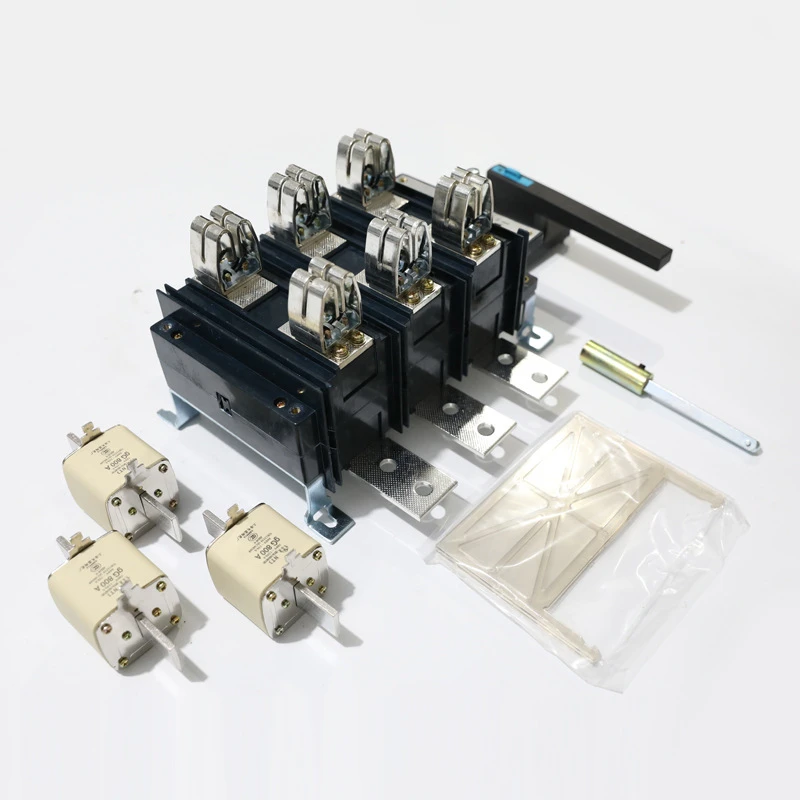
High-quality isolator switch products adopt mature industrial-grade mechanical structures, with outstanding fault current resistance and operational stability that ordinary switching devices cannot match. When sudden circuit anomalies such as short-circuit impact occur in the power grid, internal components of the switch need to withstand strong electrodynamic impact and thermal load without structural deformation or contact failure. Modern isolator switch designs adopt fast switching mechanisms and professional arc-extinguishing structures, which can effectively suppress electric sparks generated during switching and maintain the integrity of internal contacts. Equipped with transparent visual indication windows, qualified isolator switch products allow engineers and inspectors to directly observe contact separation status, realizing intuitive judgment of circuit isolation effect and avoiding potential safety hazards caused by unclear switching status.
Key Differences Between Isolator Switches and Ordinary Circuit Switches
Many electrical practitioners confuse isolator switches with conventional circuit switches due to similar cabinet installation appearances, yet their design positioning and working logic differ substantially. Ordinary circuit switches are mainly built for daily load switching and emergency fault breaking, without strict requirements on visible isolation gaps. In contrast, the core design purpose of an isolator switch focuses on reliable physical disconnection rather than frequent current breaking. It is specially engineered to lock in a fully open state, providing stable and recognizable circuit isolation for manual work. This fundamental difference makes the isolator switch irreplaceable in standardized power safety management. Understanding the functional boundaries between different switch types helps electrical designers select correct hardware, avoid mismatched device application, and build more rigorous and compliant power distribution architectures.
System-Level Value of Standardized Isolator Switch Configuration
For panel manufacturers and system integrators, standardized isolator switch selection optimizes the overall structural design of power distribution cabinets and unifies system operation logic. Modular-designed isolator switch products simplify on-site wiring layout, reduce redundant structural configuration, and make internal cabinet layout more regular and standardized. This unified structural design improves the overall consistency of power distribution equipment, facilitates subsequent daily inspection and standardized maintenance management, and adapts to large-scale batch manufacturing and engineering deployment. Reasonable isolator switch configuration helps build more standardized and stable low-voltage power distribution systems, providing basic hardware support for safe operation of various electrical equipment.
Reliable Manufacturing Standards from zhnyugroup
Stable and compliant electrical isolation hardware relies on standardized manufacturing systems and strict quality control mechanisms. As a professional manufacturer focused on low-voltage electrical components, zhnyugroup adheres to international industry specifications to develop and produce full-series isolator switch products. All products pass standardized performance testing and international certification, fully adapting to global power distribution project construction requirements. With standardized production processes and complete testing equipment, zhnyugroup maintains stable product consistency and structural reliability for every batch of products. Strict factory inspection and standardized design enable its isolator switch series to provide reliable mechanical isolation performance and compliant system configuration solutions for global engineering projects.