
 EN

What is the correct installation procedure for a panel-mounted knife switch?
Time : 2026-09-13
Core Value of Standard Panel-Mounted Knife Switch Installation
Low-voltage power distribution systems rely heavily on standardized mechanical disconnect devices to maintain overall system stability and operational consistency. A panel-mounted knife switch acts as a fundamental isolation component that supports safe circuit breaking and mechanical disconnection within enclosed electrical panels. Proper panel-mounted knife switch installation ensures the device functions consistently in line with global electrical safety norms, avoiding structural and operational inconsistencies that stem from irregular assembly. According to IEC 60947-3, the globally recognized standard for low-voltage disconnecting equipment, inconsistent electrical disconnect installation is a top contributor to unstable circuit contact, mechanical misalignment, and avoidable system anomalies. Long-term field observation of global power distribution infrastructure confirms that standardized knife switch wiring and assembly greatly improves overall system uniformity and operational reliability for all types of panel-based electrical configurations.
Pre-Installation Inspection and Standard Site Preparation
Consistent equipment performance starts with thorough pre-installation preparation before any panel-mounted knife switch installation begins. Field technicians should perform comprehensive visual and structural checks on each unit to verify intact insulating components, uniform contact blade structure, and complete hardware accessories. All units must be cross-referenced against circuit rated voltage and current parameters to ensure fundamental compatibility with existing panel configurations. Panel surfaces require careful finishing to remove sharp edges, clean mounting areas, and reserve sufficient internal clearance for mechanical movement and conductor placement. These preparatory steps create stable structural conditions for accurate knife switch wiring and reliable long-term device operation. Industry electrical safety guidelines consistently emphasize that standardized pre-assessment procedures greatly reduce assembly errors and promote uniform electrical disconnect installation quality across all project sites.
Precision Mechanical Mounting and Structural Alignment
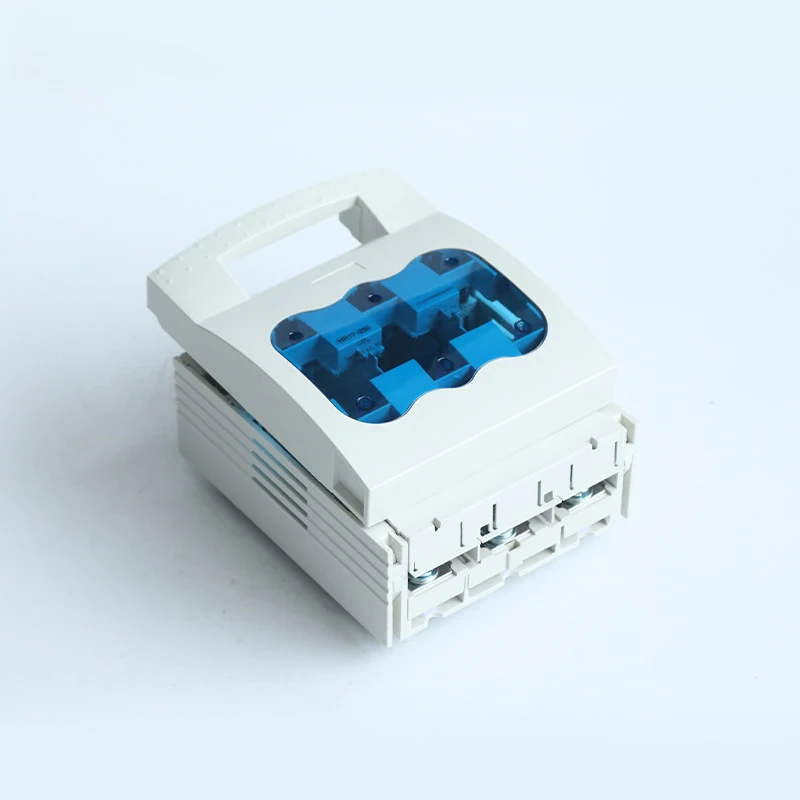
Mechanical mounting accuracy directly defines the structural stability and functional consistency of every panel-mounted knife switch. During panel-mounted knife switch installation, devices must be secured vertically on mounting panels using matched standard fasteners to maintain structural balance. Fastener tension should be applied evenly to prevent base deformation from over-tightening or positional shifting from loose fixation. Once mounted, repeated manual operation verifies smooth mechanical travel, full contact closure, and clear physical isolation gaps when open. Proper alignment ensures the switch maintains stable mechanical positioning through continuous system operation, preventing inconsistent contact pressure and structural misalignment. This careful calibration process establishes a stable mechanical foundation that supports reliable knife switch wiring performance and consistent circuit isolation over long service cycles.
Standardized Wiring Principles for Stable Circuit Performance
Knife switch wiring follows universal low-voltage electrical protocols designed to secure stable conductivity and compliant circuit isolation. All wiring work must begin with confirmed power isolation and zero-voltage verification to meet global safety operating procedures. Conductors are selected based on standard current carrying capacity matching, with clean insulation stripping and secure terminal placement. Incoming supply conductors connect to line-side terminals while outgoing circuit conductors attach to load-side terminals, following standardized phase sequence labeling on each device. Every terminal connection receives uniform torque tightening to maintain stable electrical contact and consistent conductive performance. Proper enclosure grounding is also implemented to comply with global electrical safety frameworks. Adhering to structured wiring standards ensures every electrical disconnect installation delivers consistent, repeatable performance within standardized panel systems.
Common Installation Misalignments and Standard Corrective Practices
Even with basic installation awareness, subtle operational missteps often compromise the integrity of panel-mounted knife switch setups across global project sites. Many structural and conductive issues traced back to electrical disconnect installation originate from minor alignment errors and non-uniform wiring habits that accumulate over time. Offset mounting angles, unbalanced fastener pressure, and irregular conductor routing can gradually impair mechanical flexibility and contact uniformity of the panel-mounted knife switch. Professional electrical technicians consistently highlight the importance of symmetrical structural calibration and neat, tension-free knife switch wiring to eliminate latent structural stress inside panel enclosures. Adopting unified corrective practices during installation helps unify device operating status, maintain standardized circuit isolation capabilities, and keep the entire power distribution system compliant with global low-voltage safety specifications.
Post-Installation Verification and Compliance Checkpoints
Full post-installation verification is essential to confirm that panel-mounted knife switch installation meets international compliance benchmarks. After completing mounting and knife switch wiring, technicians conduct comprehensive visual inspections to verify tidy conductor routing, secure fastening, and zero structural interference. Functional testing includes repeated mechanical cycling to confirm smooth operation and clear isolation gaps in the open position. Circuit continuity checks validate accurate on-state conduction and complete off-state isolation, ensuring the device performs exactly as defined in global low-voltage equipment standards. Authorized electrical safety bodies note that systematic post-installation verification establishes consistent operational quality across all installed disconnect devices, helping maintain uniform safety and structural compliance throughout entire power distribution networks.
Standardized Manufacturing Foundation for Global Disconnect Devices
Reliable, code-compliant panel-mounted knife switches depend on rigorous manufacturing standards and consistent quality control throughout production cycles. ZHNYU maintains decades of specialized experience developing and producing standardized low-voltage disconnect switches and power distribution components for global markets. All products adhere to international manufacturing specifications and complete standardized third-party certification processes, ensuring full alignment with global electrical system requirements. Equipped with comprehensive production and testing infrastructure, ZHNYU delivers structurally consistent, specification-compliant electrical devices that support uniform installation performance worldwide. Strict internal process control and standardized component design enable stable global supply of reliable disconnect hardware that fits universal panel assembly and electrical disconnect installation requirements.