
 EN

What is the difference between an isolator switch and a circuit breaker?
Time : 2026-09-15
Navigating the Maze of Industrial Switchgear
Walking through a high-capacity manufacturing facility, you will notice that every power distribution cabinet is packed with an intricate array of levers, dials, and heavy-duty modules. When engineers talk about keeping those systems safe and compliant, two terms pop up constantly: isolator switches and circuit breakers. A common mix-up in many control rooms is treating these two components like they do the exact same job. In reality, they serve completely different operational purposes. Getting this distinction right is essential for maintaining facility safety standards and protecting complex electrical infrastructure from severe damage.
Engineering Realities on the Factory Floor
During a facility modernization project at a large-scale processing plant, engineering teams frequently encounter confusion regarding control component selection. Relying on electronic or automated relays for lock-out/tag-out procedures without a physical disconnect can introduce unnecessary risks during maintenance windows. True electrical isolation requires an undeniable mechanical break that reassures technicians they are working in a secure environment. Field deployment experiences across various industrial settings consistently show that physical visual isolation provides the definitive baseline required for safe equipment servicing.
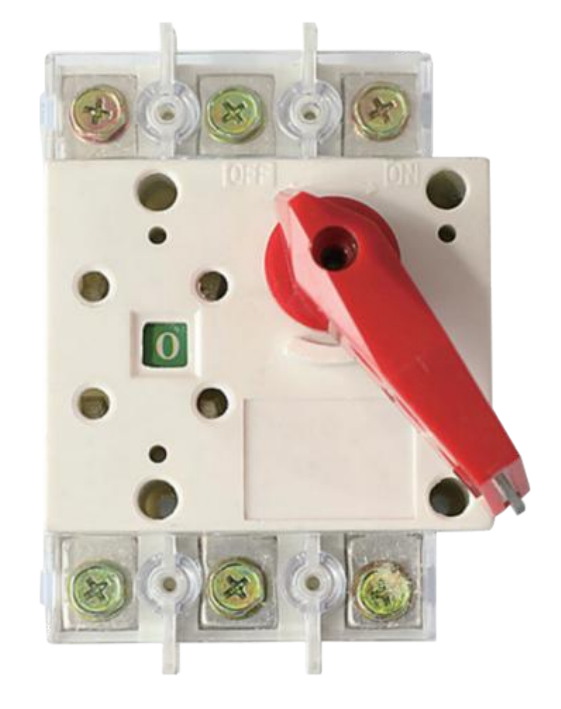
Deconstructing Technical Mechanisms: Isolation vs Protection
To truly understand the gap between these devices, you have to look under the hood at their internal engineering. An isolator switch is essentially a mechanical device designed to handle no-load or very low-load currents, featuring heavy copper contacts that create a visible physical gap. It lacks the internal arc-chutes required to extinguish high-power electrical arcs safely while under heavy load. On the flip side, a circuit breaker is an active sentinel equipped with thermal-magnetic or electronic trip units. According to technical bulletins published by the Institute of Electrical and Electronics Engineers (IEEE) and standardized under IEC 60947, a breaker is engineered to detect overcurrent spikes instantaneously, suppressing massive electrical arcs and severing the circuit automatically before thermal damage spreads.
Operational Sequence Best Practices for Daily System Operation
Professional electrical operation follows fixed standardized sequences that fully leverage the respective strengths of isolator switches and circuit breakers, a core skill for all on-site electrical management teams. In daily power system energization, the isolator switch is closed first to establish a stable physical circuit connection, followed by the closing of the circuit breaker to activate load operation. For power cutoff and equipment maintenance, the circuit breaker trips or closes first to cut off load current, and the isolator switch is then opened to create a reliable isolation air gap. This sequential operation avoids arc damage to isolator switch contacts caused by live-load switching. Adhering to this universal operational logic effectively preserves the long-term structural integrity of switchgear and maintains consistent system safety throughout daily operational cycles.
Why Misapplication of Switchgear Causes System Compliance Risks
Improper pairing or incorrect substitution between isolator switches and circuit breakers has become one of the most common compliance issues during third-party electrical audits worldwide. Many system designers mistakenly replace dedicated isolator switches with circuit breakers, assuming tripped breakers can serve as reliable isolation points. In practice, internal spring mechanisms and concealed contact structures of circuit breakers cannot provide visible, verifiable disconnection gaps. Unintended residual voltage, mechanical failure to reset fully, or internal contact adhesion can leave circuits live even after a trip action. Global electrical safety audit records indicate that such misconfiguration leads to consistent non-compliance findings and creates latent hazards during equipment inspection and troubleshooting. Correct device classification and independent installation remain fundamental for standardized, audit-ready power distribution architecture.
Comparative Dynamics: Why Both Devices Are Mandatory
Looking at how these components interact within a modern distribution board reveals a deeply collaborative relationship rather than a direct competition. When a short-circuit fault occurs downstream, the circuit breaker acts as the frontline mechanism, tripping rapidly to protect sensitive control hardware. However, once that breaker trips, physical maintenance still demands a verified air gap. That is precisely why safety codes mandate placing an isolator switch upstream. The breaker handles dynamic fault protection, while the static isolator guarantees absolute physical separation compliance during routine maintenance operations.
Commercial Value and Supply Chain Optimization
For panel builders and system integrators, selecting appropriate hardware impacts overall project costs and assembly timelines. Sourcing high-grade isolation switches and breakers that fit neatly into compact enclosure footprints reduces wiring overhead and shipping weights across international supply chains. Procurement specialists working on automation projects look for established manufacturers who offer strict batch traceability and reliable delivery timelines, ensuring that every control panel leaves the workshop fully compliant with regional electrical codes without unexpected delays.
Driving Industrial Excellence with zhnyugroup
Achieving long-term reliability in modern power distribution requires partnering with manufacturers that blend deep technical expertise with advanced production capabilities. Leveraging advanced automated assembly lines and robust global logistics networks, zhnyugroup consistently delivers high-performance isolator switches and circuit protection solutions tailored to rigorous international standards. By maintaining strict quality assurance protocols, zhnyugroup empowers global industrial partners to optimize panel architecture, ensure absolute operational safety, and achieve sustained commercial success across worldwide markets.