
 EN

How does a knife switch provide visible circuit disconnection for safety?
Understanding the Mechanics of a Knife Switch in Electrical Systems
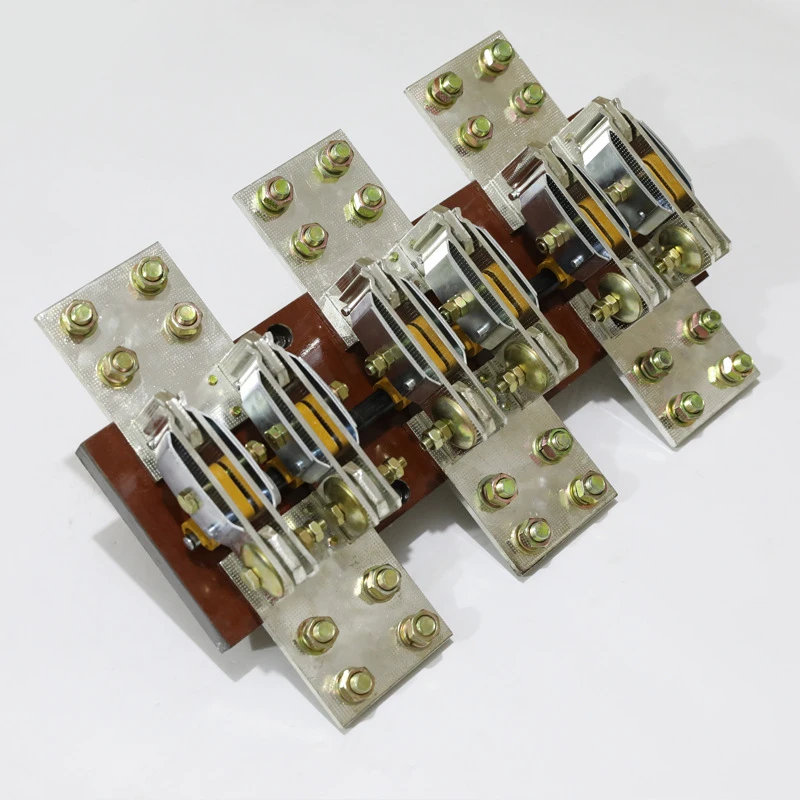
An electrical distribution network relies heavily on components that can manually open or close circuits under load or no-load conditions. Among these traditional yet highly effective electrical components, the knife switch stands out due to its straightforward mechanical design and proven operational reliability. At ZHNYU ELECTRIC, engineering teams design these switches with exposed or semi-enclosed conductive blades that hinge securely on one end and pivot smoothly into a spring-loaded contact jaw. When an operator pulls the operating handle, the physical blade lifts completely out of the contact slot, creating a distinct, unmistakable air gap. This mechanical separation is the absolute foundation of knife switch visible disconnection, allowing technicians to look directly into the switch enclosure and verify visually that the electrical path is physically broken. Unlike modern enclosed molded-case circuit breakers where internal contacts remain hidden behind opaque plastic housing, the open-blade configuration leaves zero room for ambiguity regarding the energized state of the circuit. Furthermore, this transparency gives maintenance crews absolute confidence before proceeding with hands-on tasks, eliminating doubts caused by potential indicator light failures, sensor drifts, or faulty auxiliary contacts in automated control systems. In addition, proper plant training ensures that all facility personnel understand how these physical gaps equate to absolute safety, reinforcing standard industrial protocols across all shifts and technical departments. The presence of knife switch visible disconnection remains an invaluable asset in modern power distribution.
The Critical Role of Electrical Safety Isolation in Industrial Environments
Industrial manufacturing facilities house heavy machinery, complex automated assembly lines, and high-voltage distribution panels that demand rigorous and predictable maintenance schedules. During routine servicing, troubleshooting, or component replacement, technicians face severe hazards from electric shock, dangerous arc flash events, and unexpected machinery startup. Effective electrical safety isolation is the primary and most reliable defense mechanism against these workplace hazards. By completely severing the power source before any hands-on work begins, maintenance personnel can operate in a secure, de-energized environment. A reliable industrial switch ensures that downstream equipment is completely isolated and protected against transient voltages and line surges. Proper electrical safety isolation mitigates human error and regulatory compliance risks, ensuring that facilities meet international safety standards such as OSHA and IEC guidelines for machinery safety and electrical installations across global export markets. Furthermore, documenting these isolation steps reinforces corporate safety cultures and protects workers from catastrophic accidents during major factory overhauls.
How Knife Switch Visible Disconnection Prevents Accidental Re-energization
Human error remains one of the leading causes of electrical accidents in heavy manufacturing plants worldwide. Electronic control systems, programmable logic controllers, or simple indicator lights can sometimes malfunction, falsely signaling to the operator that a system is safe when residual voltage or hidden feedback loops are still active. This is where knife switch visible disconnection provides an irreplaceable layer of psychological and physical reassurance for the working crew. When a technician sees a physical gap of several centimeters between the conductive blade and the fixed contact clip, absolute cognitive certainty is achieved instantly. There is no reliance on electronic trip indicators or digital displays that could fail or give erroneous readings during a power surge. The open air gap acts as an absolute visual barrier to electrical current flow, ensuring that even if a control signal malfunctions elsewhere in the system, electrical power cannot physically cross the open space to reach downstream components. This tangible verification process removes guesswork and significantly enhances operational safety during complex troubleshooting tasks, proving that knife switch visible disconnection is indispensable.
Integrating Lockout Tagout Disconnect Device Protocols for Maximum Safety
While visual separation offers immediate proof of an open circuit, industrial safety protocols require an extra layer of administrative and mechanical control to prevent unauthorized or accidental closure during active maintenance. Modern safety disconnect equipment incorporates built-in provisions for heavy-duty padlocking. As a reliable lockout tagout disconnect device, a properly engineered knife switch features specialized holes on the handle and frame alignment tabs. When the switch is thrown into the open position, maintenance personnel insert their personal safety padlocks through the designated apertures. This physically locks the handle in place, making it structurally impossible to push the blade back into the contact jaws. Combined with standardized warning tags detailing the technician's name, department, and contact information, this system ensures that power remains isolated until all personnel have safely cleared the work area and removed their locks. Every approved lockout tagout disconnect device guarantees full compliance with global safety mandates, ensuring total protection across industrial sites.
Enhancing Industrial Circuit Isolation with ZHNYU ELECTRIC Engineering
Achieving reliable industrial circuit isolation requires premium-grade materials and precision manufacturing processes. Industrial environments subject electrical hardware to severe thermal stress, mechanical vibration, and corrosive elements on a daily basis. ZHNYU ELECTRIC utilizes high-conductivity electrolytic copper for the blades and contact jaws, ensuring minimal electrical resistance and localized heat generation during normal continuous operation. Furthermore, durable insulating bases made of high-dielectric, arc-resistant phenolic or BMC materials prevent tracking and flashovers between adjacent phases. The robust operating mechanisms are meticulously built to withstand thousands of manual actuation cycles without losing spring tension or alignment precision. This engineering focus guarantees that the switch maintains its structural integrity and safety performance over decades of demanding industrial service. By prioritizing superior metallurgical and insulating properties, ZHNYU ELECTRIC delivers robust solutions tailored for heavy-duty export applications.
Best Practices for Maintaining and Inspecting Safety Disconnects
Even the most rugged safety hardware requires periodic inspection and preventative maintenance to perform reliably under harsh industrial conditions. Facility maintenance teams should establish routine checkups that include thermal imaging to detect high-resistance connections, cleaning accumulated dust and debris from insulating surfaces, and inspecting contact blades for pitting or oxidation. Over time, frequent arc exposure during switching can wear down contact surfaces. Technicians should verify that spring tension in the contact jaws remains firm to maintain secure pressure when closed and clean separation when opened. Documenting these thorough inspections ensures compliance with mandatory safety audits and extends the operational lifecycle of the disconnection equipment, safeguarding both personnel and facility assets continuously. Through disciplined upkeep, industrial plants maintain peak performance and uncompromised electrical safety standards across all operating units.