
 EN

What is an Isolating Switch? A Key Component for Electrical Safety and System Stability
Time : 2026-02-28
What is an Isolating Switch?
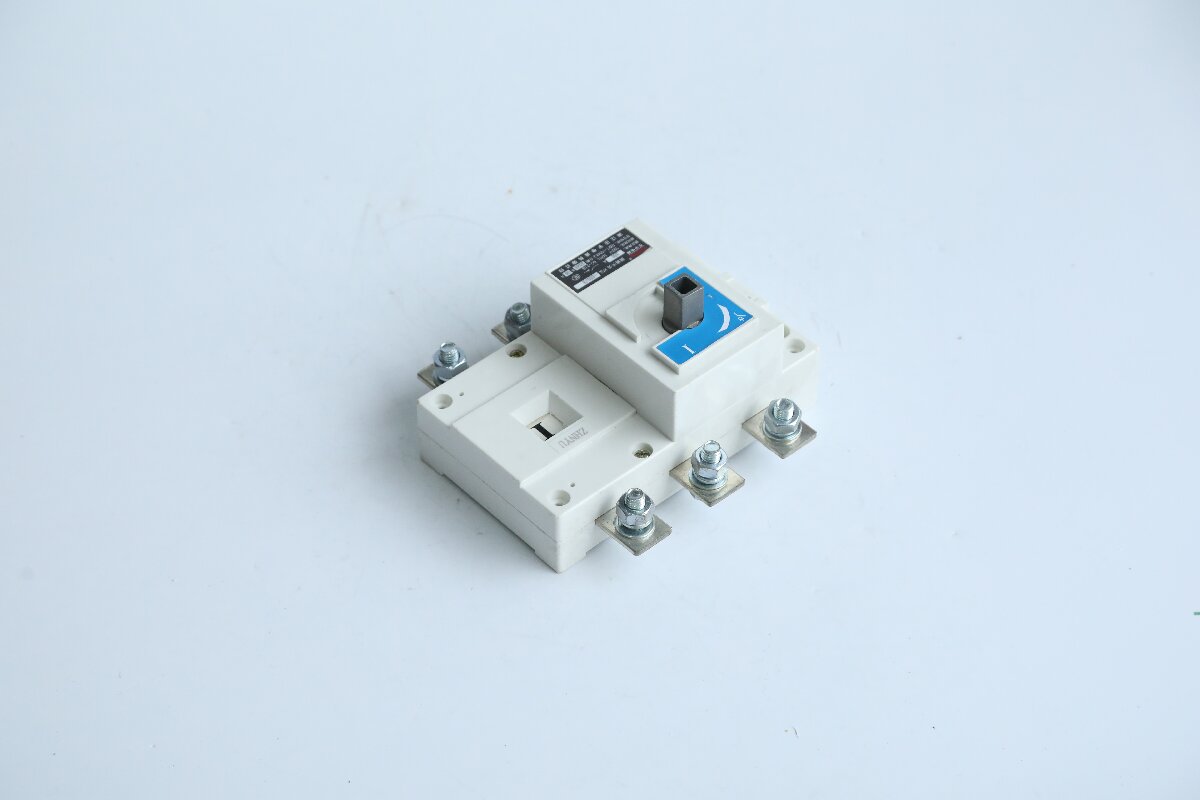
An isolating switch, also known as a disconnector or isolator, is a mechanical switching device used in electrical power systems. Its primary function is to safely isolate a circuit or a piece of equipment from the main power source.
When in the open position, it provides a visible and reliable air gap, ensuring that the isolated section is completely de-energized. This is crucial for the safety of personnel performing maintenance or repair work. Unlike a circuit breaker, an isolating switch does not have an arc-quenching mechanism and is not designed to interrupt load or fault currents. It must only be operated when the circuit is already de-energized by a circuit breaker.
Isolating Switch vs. Circuit Breaker
While often used together, they have distinct roles:
Isolating Switch: A safety lock. It operates only when the circuit is already off, providing a visible break for worker safety. It has no power to stop faults.
Circuit Breaker: An automatic protector. It actively monitors the circuit and instantly cuts power during overloads or short circuits to prevent damage.
Simple Rule: The circuit breaker stops the current; the isolating switch secures the isolation.
Where is it Applied?
Isolating switches are fundamental components in a wide range of electrical applications, from high-voltage transmission to low-voltage distribution.
Power Generation and Transmission: In substations and power plants, they are used to isolate transformers, busbars, and transmission lines for maintenance and to reconfigure the power grid.
Industrial and Commercial Buildings: They serve as main disconnect switches for heavy machinery, HVAC systems, and entire distribution panels, allowing for safe servicing of specific equipment without shutting down the whole facility.
Renewable Energy Systems: In solar photovoltaic (PV) and wind farms, DC and AC isolating switches are essential for safely disconnecting inverters, battery banks, and array strings from the system.
Residential Applications: They can be found as local disconnects for outdoor units like air conditioners or pool pumps, providing a safe way to cut power for repairs.
Key Advantages
Maximum Safety: The visible air gap provides a clear guarantee that power is cut.
Cost-Effective: Simpler and more affordable than circuit breakers.
Grid Flexibility: Allows operators to switch power routes without full shutdowns.
Equipment Protection: Prevents damage during maintenance operations.
What is an Isolating Switch?
When the isolating switch is shifted into the "open" position, it creates a physically visible and highly reliable air gap in the conductive path. This physical separation provides absolute visual confirmation to engineers and technicians that the downstream isolated section is completely de-energized. This is an indispensable safety requirement before any personnel can perform routine maintenance, inspections, or complex repair work.
Critical Technical Limitation: Unlike a circuit breaker, a standard isolating switch does not possess an arc-quenching mechanism (such as SF6 gas, vacuum, or oil chambers). Consequently, it is completely incapable of interrupting active load currents or heavy fault currents. If an isolating switch is opened while current is flowing through the line, a catastrophic electrical arc will form across the contacts, resulting in severe equipment explosion, flashover, and life-threatening danger to the operator. Therefore, it must only be operated when the circuit has already been completely de-energized by an upstream circuit breaker.
Technical Classification of Isolating Switches
1. By Voltage Level
2. By Structural Design
What is an Isolating Switch?
An isolating switch, also known as a disconnector or isolator, is a fundamental mechanical switching device used in electrical power systems. Its primary, uncompromised function is to safely isolate a specific section of a circuit, a substation, or a piece of equipment from the main electrical power source.
When the isolating switch is shifted into the "open" position, it creates a physically visible and highly reliable air gap in the conductive path. This physical separation provides absolute visual confirmation to engineers and technicians that the downstream isolated section is completely de-energized. This is an indispensable safety requirement before any personnel can perform routine maintenance, inspections, or complex repair work.
Critical Technical Limitation: Unlike a circuit breaker, a standard isolating switch does not possess an arc-quenching mechanism (such as SF6 gas, vacuum, or oil chambers). Consequently, it is completely incapable of interrupting active load currents or heavy fault currents. If an isolating switch is opened while current is flowing through the line, a catastrophic electrical arc will form across the contacts, resulting in severe equipment explosion, flashover, and life-threatening danger to the operator. Therefore, it must only be operated when the circuit has already been completely de-energized by an upstream circuit breaker.
Technical Classification of Isolating Switches
Depending on the voltage level, installation environment, and structural design, isolating switches are categorized into several types:
1. By Voltage Level
High-Voltage Isolators: Used in outdoor substations and transmission lines (ranging from 11kV up to hundreds of kV). These are massive structures that often use rotating insulators or pantograph mechanisms to create large air gaps.
Low-Voltage Isolators: Compact, DIN-rail mounted devices housed within residential or commercial distribution boards, designed for local low-voltage isolation (typically 230V/400V).
2. By Structural Design
Single-Break vs. Double-Break: Single-break switches open at a single contact point per phase, while double-break switches feature a center moving blade that detaches from two stationary contacts simultaneously, doubling the isolation gap.
Earthing Switches: Many high-voltage isolating switches come integrated with an earthing blade. Once the isolator is opened, the earthing switch safely connects the isolated circuit line to the ground, discharging any trapped capacitive charges or accidental back-feed current.
Where is it Applied?
Power Generation and Transmission
Industrial and Commercial Buildings
Renewable Energy Systems
Residential Applications
Where is it Applied?
Isolating switches are fundamental components integrated across a wide spectrum of electrical infrastructures:
Power Generation and Transmission
In high-voltage substations, power plants, and grid networks, disconnectors are strategically placed on both sides of high-value components like power transformers, busbars, and long-distance transmission lines. They allow operators to isolate sections for maintenance or to safely reconfigure grid routing without shutting down adjacent live paths.
Industrial and Commercial Buildings
In manufacturing plants and large facilities, heavy-duty isolating switches act as the Main Disconnect Switch located within eyesight of heavy machinery, conveyors, and massive HVAC units. This setup—often complying with Lockout-Tagout (LOTO) safety protocols—ensures a technician can service a motor without fearing someone might accidentally restart it from a remote control room.
Renewable Energy Systems
In solar photovoltaic (PV) power plants and wind farms, both DC and AC isolating switches are legally mandated. High-voltage DC isolators are installed between the solar panels and the central inverters, allowing safe isolation of the high-voltage DC strings during inverter maintenance or battery bank servicing.
Residential Applications
On a smaller scale, waterproof local isolating switches are commonly mounted next to outdoor air conditioner compressor units, heat pumps, or pool filtration systems, allowing residential service technicians to cut power locally without entering the home.
Key Advantages
Key Advantages
Maximum Safety: The unmistakable, visible air gap provides operators and safety inspectors with a foolproof psychological and physical guarantee that the downstream power is completely severed.
Cost-Effective: Because they do not require complex vacuum chambers, heavy springs, or sophisticated electronic trip units, isolating switches are much simpler and more affordable to manufacture and maintain than circuit breakers.
Grid Flexibility: They provide system operators with the agility to bypass damaged segments, redirect power pathways, and perform grid optimization maneuvers without full network shutdowns.
Equipment Protection: By completely divorcing equipment from the grid grid, it eliminates the risk of voltage surges, lightning strikes, or accidental remote switching from breaking through to affect personnel during sensitive maintenance windows.