
 EN

How does an air circuit breaker provide selective coordination?
Understanding the Principles of Electrical System Coordination in Industrial Networks
In extensive industrial power distribution and complex commercial infrastructures, maintaining continuous facility uptime relies heavily on the strategic organization of protective devices. When fault currents or overloads occur, modern electrical grids must isolate only the localized compromised branch while keeping the rest of the network fully operational. At ZHNYU ELECTRIC, our engineering teams routinely evaluate how comprehensive electrical system coordination prevents widespread blackouts and expensive operational downtime. Achieving this precise selectivity requires understanding how multi-tiered distribution architecture handles transient disturbances. A robustly designed air circuit breaker selective coordination strategy ensures that downstream sub-circuit breakers clear minor anomalies before main incoming devices react. By implementing meticulous engineering protocols, facility operators protect sensitive machinery and heavy-duty infrastructure from cascading electrical failures.
The Role of Air Circuit Breakers in Achieving Multi-Tiered Protection Selectivity
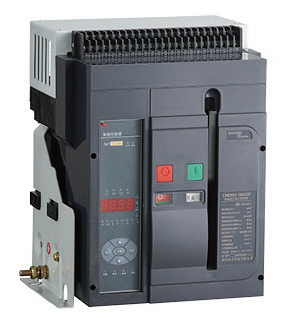
To comprehend how power distribution hardware achieves precise discrimination, one must examine the operational mechanics of high-capacity framing breakers. In typical multi-level switchboards, an advanced air circuit breaker acts as the primary defense at the main incoming feeder, coordinating closely with downstream molded-case breakers and sub-feeders. The foundational mechanism of circuit breaker protection selectivity relies on establishing clear chronological and current thresholds between tiers. When a severe short circuit occurs near a terminal load, the nearest local protective device must trip instantaneously. Meanwhile, the upstream main breaker introduces a precisely calibrated time delay, allowing downstream components adequate time to clear the fault independently. This hierarchical time-current grading prevents unnecessary tripping of the entire facility supply, ensuring superior reliability across heavy industrial plants and commercial buildings.
Advanced Electronic Trip Units and Time-Current Grading
Modern air circuit breaker selective coordination is heavily dependent on sophisticated microprocessor-based electronic trip units embedded within the breaker chassis. These advanced digital controllers allow electrical engineers to program precise long-time pickup, short-time delay, and instantaneous trip parameters tailored to specific facility requirements. During field commissioning and design audits, ZHNYU ELECTRIC technicians emphasize that adjusting these parameters guarantees proper ACB coordination across varying load profiles. For instance, by configuring a defined short-time withstand band, an upstream breaker can safely ride through moderate transient inrush currents generated by heavy motor startups without compromising its discrimination capabilities. This level of precise electronic configurability transforms traditional power distribution into a highly predictable, intelligent network capable of handling complex industrial load fluctuations smoothly.
Overcoming High Fault Currents Through Robust Engineering Design
Managing massive fault currents in industrial environments introduces severe thermal and electrodynamic stresses that can easily compromise inferior switching equipment. Effective circuit breaker protection selectivity demands that protective devices maintain mechanical and electrical integrity even when subjected to intense short-circuit forces. An industrial-grade air circuit breaker is specifically engineered with robust contact assemblies, high-purity arc chutes, and high short-time withstand ratings to endure heavy fault energy during the selective delay window. At ZHNYU ELECTRIC, our manufacturing processes prioritize rigorous testing standards to ensure that each unit withstands severe thermal escalation without welding its primary contacts. This structural resilience guarantees that the breaker remains fully operational and capable of executing its designated trip sequence precisely when complex network contingencies demand it.
Practical Guidelines for System Design, Testing, and Maintenance
Implementing flawless ACB coordination extends far beyond initial hardware selection; it requires disciplined engineering calculations, regular testing, and proactive maintenance schedules. Facility managers must conduct comprehensive coordination studies to map out time-current characteristic curves for every tier within the electrical architecture. Periodic maintenance technicians should inspect trip unit calibration, terminal torques, and contact wear to ensure that operational parameters do not drift over time. ZHNYU ELECTRIC provides transparent technical guidance to support electrical professionals in verifying trip curves and maintaining accurate settings. By combining rigorous upfront design coordination with diligent ongoing facility oversight, industrial operators can achieve absolute reliability, preventing catastrophic equipment damage and ensuring seamless operational continuity.
Enhancing Grid Reliability and Future-Proofing Electrical Infrastructure
The continuous expansion of modern industrial electrification requires ongoing innovation in protective device engineering and intelligent distribution design. Whether managing complex commercial complexes or heavy manufacturing lines, the ultimate objective remains safeguarding human life, structural property, and sensitive electronic investments. Through stringent manufacturing standards and advanced trip unit technology, ZHNYU ELECTRIC delivers robust solutions tailored for demanding air circuit breaker selective coordination applications worldwide. Ultimately, mastering the art of electrical system coordination empowers engineers to construct resilient, highly reliable power networks that guarantee safety, minimize operational interruptions, and support long-term productivity across all industrial sectors.
Advanced Diagnostic Tools and Digital Integration in Modern ACB Coordination
As electrical distribution networks become increasingly sophisticated, modern engineering practices leverage digital communication and advanced trip unit diagnostics to optimize air circuit breaker selective coordination. Contemporary installations frequently incorporate integrated metering, real-time event logs, and remote monitoring capabilities directly into the breaker trip architecture. This technological integration allows facility operators and electrical engineers to analyze historical fault data, verify time-current curves digitally, and ensure that ACB coordination remains optimized even as facility power loads evolve. ZHNYU ELECTRIC emphasizes that combining robust mechanical engineering with intelligent digital diagnostics empowers maintenance teams to proactively identify potential anomalies, prevent nuisance interruptions, and maintain flawless circuit breaker protection selectivity across demanding industrial and commercial environments.